
Replacing missing teeth can raise many questions, especially when you’re considering a treatment that involves several stages. From understanding how the process works to learning about recovery and daily care, having reliable information can make it easier to discuss your options with a dental professional. Tooth replacement can also involve different approaches, and the right choice depends on factors such as oral health, bone structure, lifestyle, and personal goals.
Dental treatment has advanced significantly, giving patients more options for replacing missing teeth and restoring everyday function. A consultation can help determine which solution is appropriate based on the condition of your teeth, gums, and jaw.
It also provides an opportunity to ask questions about the procedure, expected timeline, maintenance, and potential results.
While every patient’s experience is different, learning the answers to common questions can help you prepare for a conversation with your dentist. The following information covers some of the questions people often have when exploring tooth replacement.
What Are Dental Implants?
Dental implants are tooth replacement devices designed to support an artificial tooth. The treatment typically involves placing a small post into the jawbone, where it can serve as a stable foundation for a crown, bridge, or other restoration.
Unlike removable dentures, an implant-supported restoration is anchored in place. The post is positioned within the jawbone and allowed time to integrate with the surrounding bone before the final restoration is attached.
The process can take several months because healing and integration are important parts of treatment. Your dentist can explain each stage and provide a timeline based on your individual circumstances.
Who Can Get Them?
Many adults with missing teeth may be candidates for implant treatment, but suitability depends on several factors. A dentist will generally evaluate the health of your gums, the condition of your jawbone, and your overall oral health before recommending a treatment plan.
Adequate bone structure is important because the implant post needs a stable foundation. Some people who don’t initially have enough bone may have options for improving the available support before treatment.
Existing oral health concerns may also need to be addressed first. Treating issues such as gum disease or active infections can help create healthier conditions for tooth replacement.
Because every case is different, an examination and appropriate imaging are important before deciding whether this option is suitable.
How Long Does the Process Take?
Treatment timelines vary depending on the number of teeth being replaced, the condition of the jawbone, and whether additional procedures are necessary. Some patients may complete treatment in several months, while others require a longer healing period.
The process commonly includes an initial consultation, placement of the implant post, a healing period, and attachment of the final restoration. Additional procedures can extend the timeline.
Although waiting for healing can require patience, each stage serves a purpose. Allowing the jawbone and surrounding tissues to heal properly can provide a stable foundation for the completed restoration.
Your dentist can provide a more personalized estimate after evaluating your oral health and treatment needs.
Is the Procedure Painful?
It’s understandable to have concerns about discomfort during dental treatment. Local anesthesia is typically used during implant placement to keep the treatment area numb. Sedation options may also be available for patients who experience significant dental anxiety.
Some soreness, swelling, or tenderness can occur after the procedure as the tissues heal. Your dental provider can provide aftercare instructions and explain ways to manage expected discomfort.
Following those instructions can support a smoother recovery. Patients should also contact their dental provider if they experience unexpected or severe symptoms rather than assuming they are part of normal healing.
How Do You Care for Them?
Daily care is an important part of maintaining an implant-supported restoration. Brushing twice a day and cleaning between the teeth can help remove plaque and food particles around the restoration and surrounding gums.
Your dentist may recommend specific flossing tools, interdental brushes, or other cleaning products depending on your restoration. Following those recommendations can make daily maintenance easier.
Regular dental visits are also important. Professional cleanings and examinations can help monitor the condition of your gums, natural teeth, and restoration.
Good oral hygiene isn’t only about protecting the replacement tooth. Healthy gum tissue provides important support around the implant area, making consistent home care an essential part of long-term maintenance.
What Should You Expect During Recovery?
Recovery varies from one person to another. Immediately following placement, your dental provider may recommend temporary changes to your diet and provide instructions for caring for the treatment area.
Swelling and tenderness can occur during the early stages of healing. Following post-treatment instructions, maintaining appropriate oral hygiene, and attending follow-up appointments can support the recovery process.
It’s important to remember that the implant may continue integrating with the jawbone after initial symptoms have subsided. The restoration may not be attached immediately because adequate healing time can be necessary.
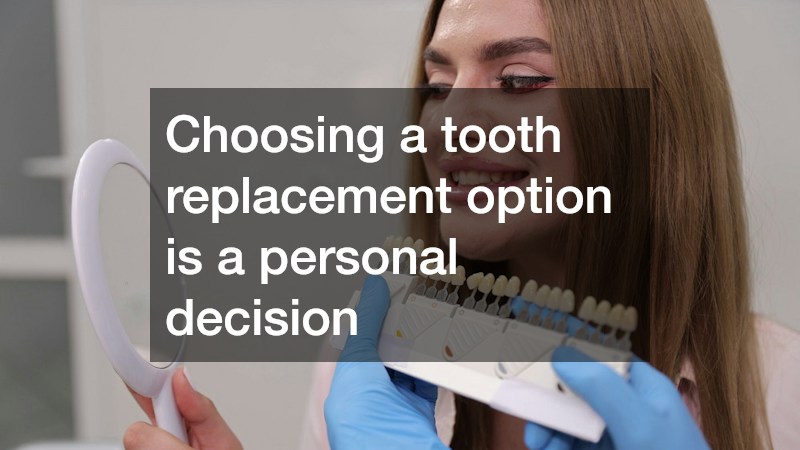
Choosing a tooth replacement option is a personal decision that should be based on your oral health, treatment goals, and professional guidance. Understanding the process can help you feel more prepared to discuss your choices with your dentist and ask questions about what to expect.
Dental implants can provide a stable foundation for replacing missing teeth, but treatment involves multiple considerations. Candidacy, healing time, oral hygiene, restoration options, and long-term maintenance can all affect the overall experience. A thorough dental evaluation is an important first step because it allows your provider to assess your individual needs.
If you’re considering replacing one or more missing teeth, schedule a consultation with a qualified dental professional. Bringing a list of questions to your appointment can help you understand your options and determine which approach aligns with your oral health needs and long-term goals.